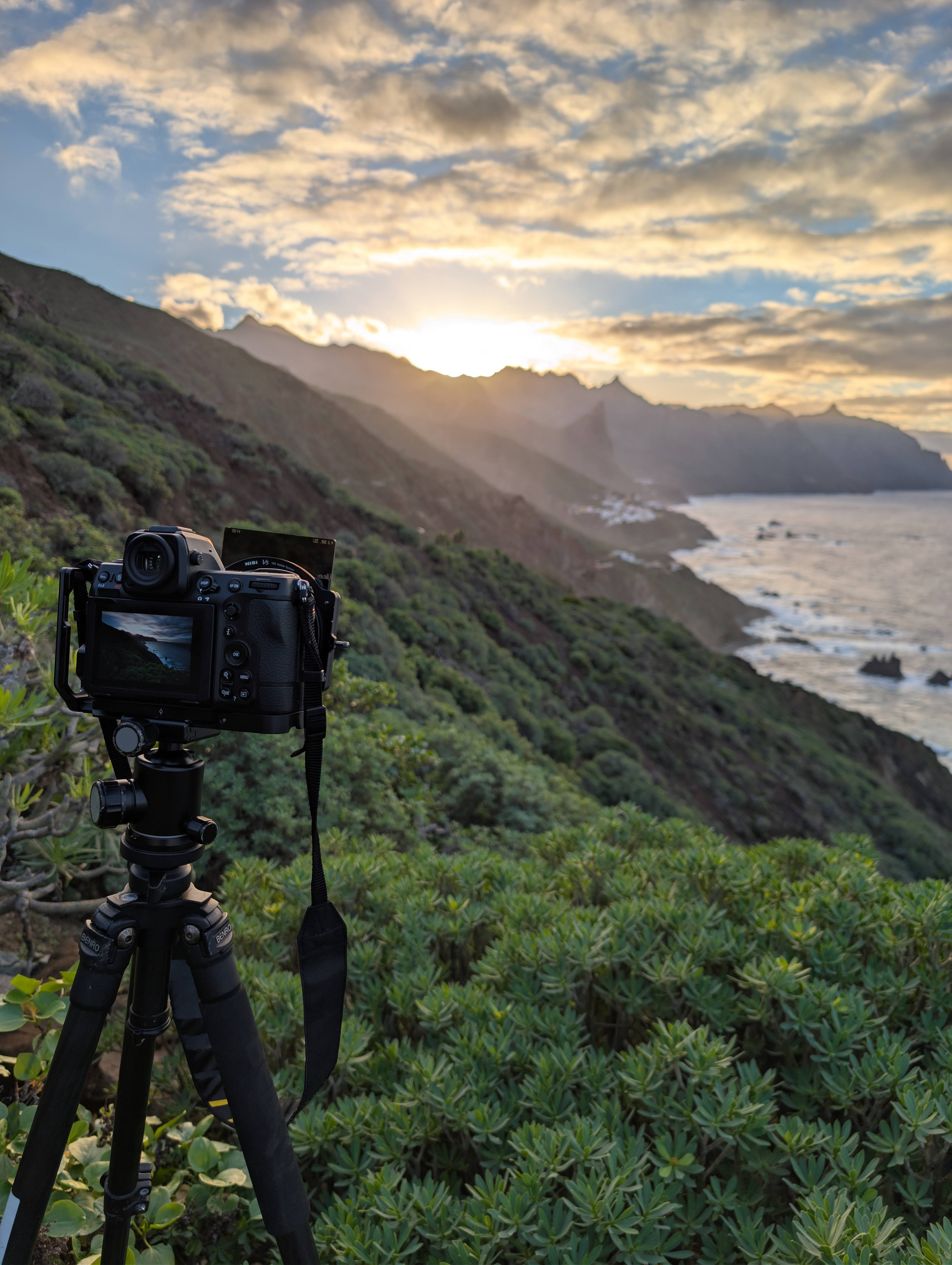
For twelve years, my Nikon D800 was the only camera I needed. It was heavy, slow, and had an autofocus system from another era — but it produced images with a depth and richness that I never questioned. The dynamic range was absurd for its time. The colors were Nikon colors, which is to say: exactly right. It was the kind of camera you stop thinking about because it just delivers.
But mirrorless was happening. Stabilization that let you shoot at a quarter of a second handheld. Autofocus that tracked eyes across the frame. Electronic viewfinders that showed you the exposure before you pressed the shutter. I kept telling myself the D800 was enough, and it was — until I started wondering what I was missing.
So over the past year I did something a bit reckless: I bought, sold, rented, and borrowed every mirrorless camera I could get my hands on. Canon R5, R6, R6 Mark II. Nikon Z7 II, Z8, Z5. A friend's Sony A7 III. I paired them with every lens combination I could think of. I shot landscapes, portraits, long exposures, indoor events, and macro. I compared RAW files at the pixel level in Capture One and Lightroom.
This is what I learned.
The Canon honeymoon
I started with the Canon R5. It was love at first click.
The autofocus was unreal — not incrementally better than my D800, but a completely different experience. Eye tracking that actually worked. Subject recognition that locked on and stayed on. Even with the cheap RF 50mm f/1.8, the focusing experience was smooth and confident. I tried a friend's R6 Mark II and the autofocus was somehow even better.
The IBIS was incredible. I was getting sharp handheld shots at half a second. The Canon RF 14-35mm f/4 was sharp edge to edge, wider than 14mm in practice when you accounted for distortion correction, and it had its own stabilization on top of the body IBIS. The menus were intuitive. The ergonomics felt right. Even the flip screen was genuinely useful in the field.
Canon's mirrorless system felt mature. They had invented Dual Pixel AF back in 2013, and it showed — their system was ahead in ways Nikon's still wasn't. Every pixel on the sensor contributes to autofocus, which gives the camera an enormous amount of information about where subjects are. I'll dig deeper into why this actually matters in a separate post.
I bought the R5 used for 2000 euros, paired it with the 14-35mm, and felt like I'd found my system. I even used it as a test camera for my DNG backup experiments. I was already planning what lenses to buy next.
Looking back now, I still think Canon has the best overall mirrorless system when you consider everything — ergonomics, lens quality, autofocus performance, and feature completeness. But "best overall" doesn't mean "best for how I shoot."
Cracks in the armor
Then I took it out for long exposures — the kind of photography I do most. I like the manual, single-shot process of a minutes-long exposure. You could average multiple shorter shots in Photoshop and get similar results, but that's not the point. The way I shoot is part of why I shoot.
The first thing I noticed was filter vignetting. My NiSi 77mm filter holder produced severe dark corners on the RF 14-35mm at 14mm. This was despite reviews claiming you could stack circular filters on this lens without issues. I tried using a 77-82mm step-up adapter to eliminate the vignetting, but it only made things worse.
I eventually solved this with a Haida M10 holder which had zero vignetting, but it was an annoying and expensive discovery — especially since I preferred the NiSi system I already owned. The RF 14-35mm simply couldn't work with NiSi filters at 14mm without compromises.
The real problem was the sensor. Long exposures revealed colored hot pixel noise scattered across the shadow areas — tiny red, green, and blue dots that appeared even at ISO 100. I pushed the exposure just 1.5 stops and shadows to +80, and this is what the shadows looked like:
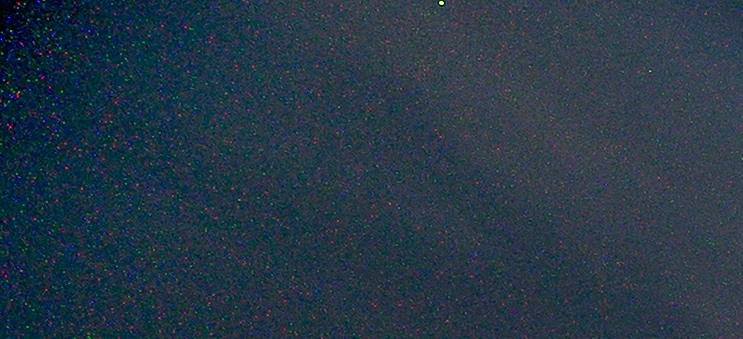
I'd never seen this with my D800 unless I was doing extreme shadow recovery. The R5 was producing this noise at modest adjustments. Higher ISOs made it dramatically worse, and longer exposures compounded the problem. I later understood why: Canon's Dual Pixel AF means every pixel on the sensor is doing double duty — sensing light and measuring focus. During long exposures, this generates more heat, which directly contributes to hot pixel noise. The same technology behind Canon's great autofocus was working against me for the photography I do most.
There was also the lens ecosystem problem. Canon had locked down the RF mount — no third-party manufacturers could make autofocus lenses for it. This meant every lens I wanted cost significantly more than the Nikon or Sony equivalent, and the selection was far more limited. Want a tele zoom? Your options were expensive Canon glass or adapted EF lenses. No Tamron, no Sigma, no budget-friendly alternatives.
Running back to Nikon
I ordered a Nikon Z8 before a trip to Madeira. Partly because I was worried about the Canon's long exposure issues, partly because I missed Nikon colors.
The difference was immediate. Long exposures were clean. Shadow recovery at +5 or even +6 stops was usable. Nikon RAW files just contained more information — the dynamic range advantage wasn't theoretical, it was visible in every file I processed. The colors were rich and exactly as I remembered them from twelve years of shooting Nikon.
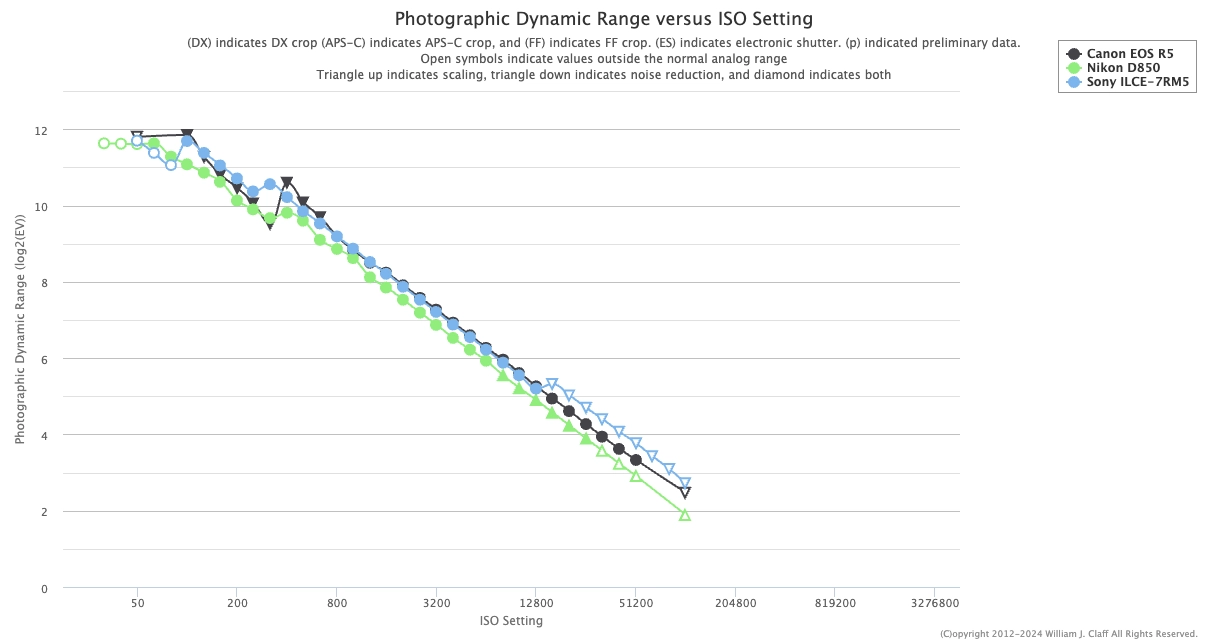
But the Z8 cost almost 2900 euros new. For the body alone. Combined with native lenses, a complete system was running well above 4000 euros. That's hard to justify when you're a landscape photographer who goes out a few times a month.
There was one thing that made Nikon's pricing much more palatable though: the Z mount accepts Sony FE lenses via an adapter. A 150 euro Megadap ETZ21 adapter gave me access to virtually any lens within Sony, Nikon, Tamron, Sigma — essentially every modern mirrorless lens with full autofocus. This flexibility matters to me. I don't want to be locked into a single ecosystem long-term, and while I usually end up with Sony or Nikon glass, having that freedom changes how I think about the system. This completely changed the economics.
The autofocus was noticeably weaker than Canon. At a birthday party in February, I shot the same event with a borrowed Nikon Z7 II and a Canon R6 II — about 87% of Canon shots were properly in focus compared to roughly 70% on the Nikon. For events and fast-moving subjects, Canon had a real advantage. But for landscape photography on a tripod? Autofocus quality is almost completely irrelevant. I wrote a deep dive on the autofocus differences if you want the technical explanation.
Why not Sony?
At this point you might be wondering: why not Sony?
I seriously considered the Sony A7R V. I already owned a few Sony lenses from earlier experiments, so switching wouldn't require rebuilding an entire lens collection. The A7R V offered real advantages: about 1/2 to 2/3 of a stop better dynamic range than Canon, autofocus performance much better than Nikon (though not quite at Canon's level), and 61 megapixels compared to Nikon's 45. Plus Sony's OSS lenses synchronize with IBIS, giving you both systems working together — when you adapt Sony lenses to Nikon, you get either IBIS or OSS, not both.
On paper, Sony looked like the smart choice. Better sensor than Canon, better autofocus than Nikon, already owned compatible lenses. The A7R V was tempting.
But there was one dealbreaker: the Nikon 14-30mm f/4.
This lens is unique. It's the only ultra-wide lens I know of that can use NiSi filters directly at 14mm without vignetting or adapters. Sony's 12-24mm f/4 can't take filters at all. Their 16-35mm options work with filters, but you lose the 14mm focal length. Canon's 14-35mm has the vignetting issues I already described. The Nikon 14-30mm just works — screw-in 82mm filters, no compromises, no workarounds. I wrote a detailed comparison of these ultra-wide lenses explaining why filter compatibility ended up being the decisive factor.
For the kind of long exposure landscape work I do, this matters more than an extra 1/2 stop of dynamic range or better autofocus. I needed a system that wouldn't fight me at 14mm with a 10-stop ND filter attached.
So Sony stayed on the list of "maybe someday," and I kept working with Nikon.
The 500 euro revelation
Here's where the story takes an unexpected turn.
I sold the Z8. It was too much camera for what I needed. Instead, I bought a Nikon Z5 refurbished from Rebuy for 500 euros with a one-year warranty.
The Z5 was supposed to be a backup body, something cheap to have around while I figured out my next move. But it turned out to be great. Same Nikon colors. Same clean long exposures. Same mount, same lens compatibility. The sensor was smaller than the Z8's, sure — 24 megapixels instead of 45 — but for landscapes and the kind of photography I actually do, it was more than enough.
I started using it as my primary camera and couldn't find a reason to go back to something more expensive. Five hundred euros. With a warranty.
The final plot twist
A few months later, I found a used Nikon Z7 for 800 euros. The Z7 is essentially the Z5 body with the D850's 45-megapixel sensor — the same sensor that had defined a generation of landscape photography. Same incredible dynamic range. Same resolution that lets you crop aggressively and still have detail to spare.
So my final setup is: a Nikon Z5 and a Nikon Z7. Two full-frame mirrorless bodies. Total cost: 1300 euros. That's less than what a single Canon R5 body costs used.
What I actually learned
After a year of camera hopping, here's my honest assessment:
| Canon R5 | Nikon Z8 / Z7 | |
|---|---|---|
| Colors | Good, a bit flat out of the box. Workable in Capture One with custom profiles. | Excellent. Rich, deep, and right from the start. Clear winner. |
| Autofocus | Exceptional. Best in the industry. Advanced subject tracking just works. | Functional but inconsistent. Worse in low light, better in Starlight mode for sensitivity. |
| Sensor / DR | Good. About 4 stops of usable shadow recovery. Hot pixel issues in long exposures. | Excellent. 5-6 stops of shadow recovery. Clean long exposures even at minutes. |
| IBIS | Outstanding. Sharp shots at 1/2 second. | Weaker. Noticeable difference for handheld shooting. |
| Lenses | Excellent optics but RF mount is locked down. No third-party AF lenses. Expensive. | Good native options, plus full access to Sony FE lenses via adapter. Far cheaper. |
| Cost | Body ~2000 used. Full system easily 4000+. | Z5 for 500, Z7 for 800. Full system well under 2000. |
The biggest lesson: match the camera to how you actually shoot. If you do events, weddings, sports — Canon's autofocus advantage matters. If you do landscape, architecture, long exposure — Nikon's sensor quality and lens ecosystem are far more relevant, and the autofocus barely matters.
I spent a year and probably too much money learning that the camera I needed wasn't the best camera, or the most expensive, or the one with the most impressive specs. It was the one that matched how I shoot, paired with lenses I could actually afford.
Two Nikon bodies. Under 1300 euros.